
Where should a porta potty go on a job site or event?
Start with ground. A standard unit needs a flat, stable surface, since ADA Standards 302.1 calls for firm, slip-resistant footing even where accessibility isn't required. Gravel, asphalt or packed dirt all work. Avoid slopes, soft mud and anywhere water pools after rain. Keep units 5 to 10 feet from doors, walkways and anything people gather around, and leave room for the service truck to reach the tank without threading between parked cars or dumpsters. If you're also renting a roll-off dumpster, plan the two separately. A dumpster placement permit may be required depending on whether the container sits on the street or your own lot, and dumpster placement permit costs vary by jurisdiction, so check with the city before delivery day. For toilets, if you're placing units near a construction dumpster rental or a temporary fence rental perimeter, keep a straight, unobstructed lane so nothing blocks either service door.
Where does a porta potty go in the public right of way?
Curb and sidewalk placement in Cleveland needs confirming with the city before you commit to a spot. Some jobs land the unit entirely on private property and skip the question; others need the sidewalk or a curb lane, and that decision belongs to the local permitting desk, not a guess. Until you've confirmed it, treat the right of way as off-limits and plan for on-site placement instead. This is also the moment to think about a porta potty permit requirements check generally, since placement and permitting often get decided together. If your project also needs a storage container rental or a mobile office trailer rental on site, those units usually need the same clearance and access review, and if a trailer door gets damaged mid-project, mobile office trailer replacement doors are a repair question worth raising with your rental company early rather than at teardown.
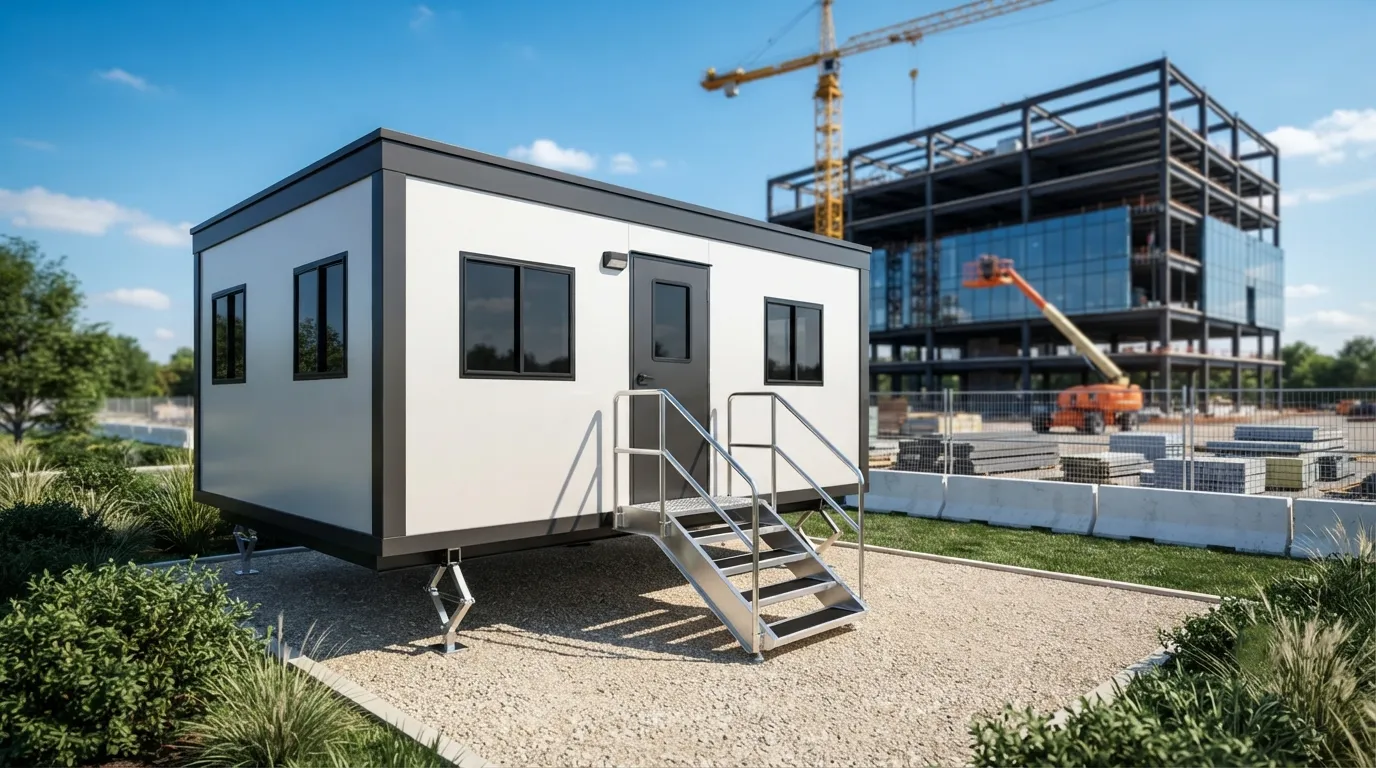
How much clearance does a service truck need?
A roll-off delivery needs about 60 feet of straight clearance behind the truck, and a portable toilet service truck needs a similar straight shot to pump the 60 to 70 gallon holding tank without backing across landscaping or parked equipment. Measure your access lane before delivery, not after. Cleveland lots with alley access or tight urban frontage sometimes can't give a truck that much room, which is one reason placement gets confirmed by phone before the unit ships. If you're near Lakewood, 7.9 miles west of Cleveland, or Parma, 10.4 miles south, the same clearance math applies. Density doesn't change the truck's turning radius. For ADA units, add extra: ADA Standards 304.3.1 requires a 60 inch turning circle inside the unit, and the approach path needs the same 36 inch clearance as any accessible route. See the ADA accessible porta potty page for unit specifics, or the ADA restroom requirements guide for the broader rule set.
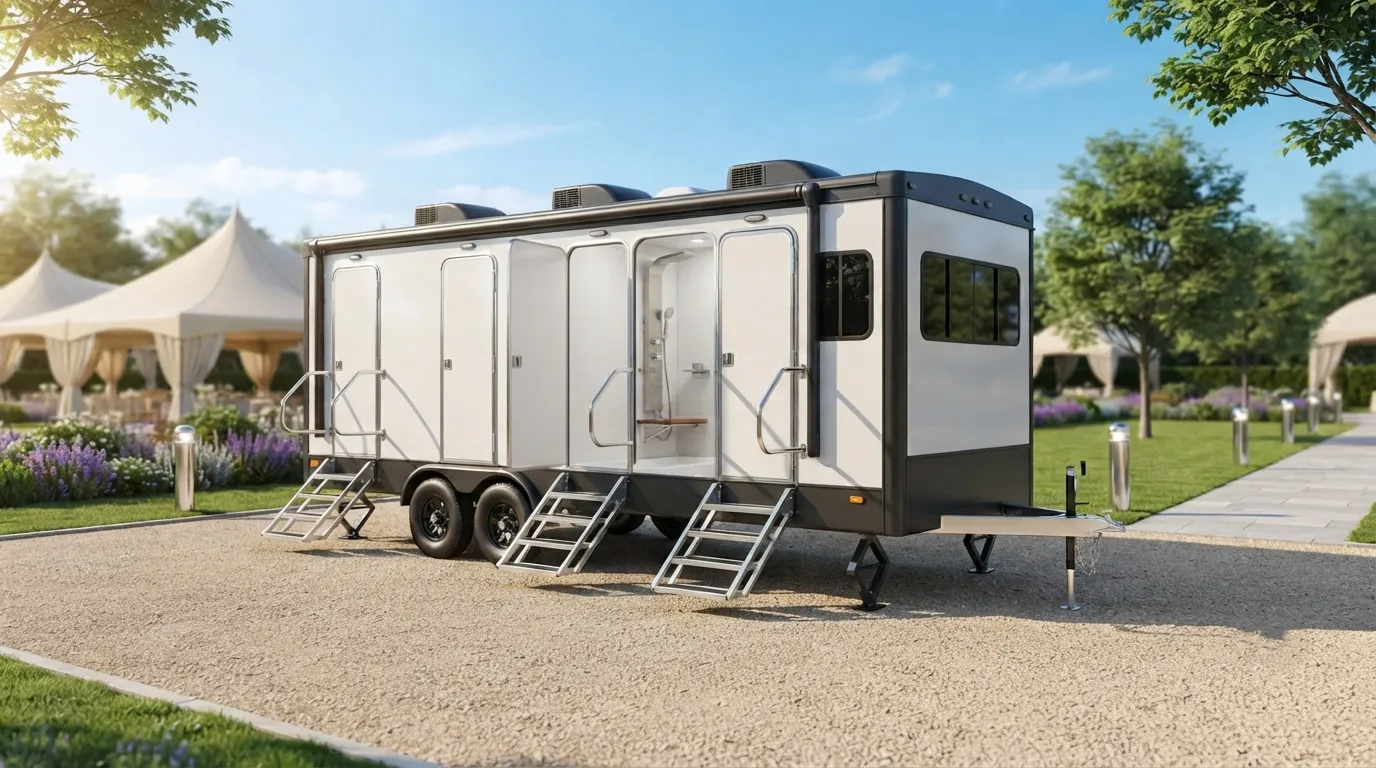
What are the rules for worksite handwashing and sink placement?
Handwashing stations follow their own placement logic. 29 CFR 1910.141(d)(2) requires soap and towels or a hand-drying device at the station, not sanitizer alone, so plan a spot with a flat pad and enough room to restock supplies during weekly service. If your crew is using paints, coatings or similar contaminants, OSHA 1926.51(f)(1) requires washing facilities near that work specifically. A handwashing station rental or portable sink rental needs the same footing as a toilet unit, and if you're running an Ozark River unit already, Ozark River portable sink replacement parts are worth sourcing ahead of a long job so a cracked pump or worn spigot doesn't stall your handwashing setup mid-rental. Review handwashing requirements before you finalize the layout, especially on multi-week builds. Worker count also drives unit count under OSHA 1926.51(c): one toilet for 20 workers or fewer, scaling up from there, and the how many porta potties do I need guide walks through the math for larger crews.
| scenario | clearance needed | notes |
|---|---|---|
| standard unit pad | 44 x 48 inches | flat, stable ground |
| accessible route | 36 inches wide | ADA Standards 403.5.1 |
| ADA turning space | 60 inch diameter | ADA Standards 304.3.1 |
| roll-off truck access | 60 feet straight | behind the container |
Farms and rural sites near Cleveland have their own placement rule: OSHA 1928.110 requires field sanitation facilities within a quarter mile walk of hand-labor workers, one per 20 employees. That's worth knowing if your site straddles a construction lot and open field, which is common on projects heading toward Strongsville, 18.4 miles southwest, or out past Euclid, 14.4 miles northeast. For septic-served properties near any of these placements, a residential tank is typically pumped every 3 to 5 years, and that schedule matters if you're adding portable units to a site that's already leaning on an aging tank; see septic pumping service or how often to pump a septic tank for more. And if you're coordinating service outside Cleveland proper, a Placerville septic pumping service question comes up often enough in other markets that it's worth confirming your provider covers your specific address before delivery day, not after.
How far from a building does a porta potty need to be?
There's no single fixed distance in the codes we cite here. Keep 5 to 10 feet from doors and windows for odor and access, more if foot traffic is heavy. Confirm any building-specific setback with your site plan or porta potty permit requirements contact.
Can a porta potty sit on grass or dirt?
Yes, if it's flat and drains well. Soft or sloped ground shifts the unit and risks tipping. Gravel or plywood pads work well on uneven Cleveland lots, especially after rain softens turf.
Does the unit need to face a certain direction?
No code requires it, but face the door away from wind-driven odor paths and toward your access route. Service techs appreciate a clear approach for the weekly tank pump.
How many units does a construction crew need?
OSHA 1926.51(c) sets the baseline: one toilet for 20 workers or fewer, then one toilet and one urinal per 40 workers up to 200. See OSHA portable toilet requirements for the full table.
What if my site has no flat ground at all?
Ask about pads or leveling blocks before delivery. Some sites need gravel brought in first. Call Cleveland Porta Pros or request a quote and describe the terrain so the crew comes prepared.
Next step
Get a delivery date
Tell us the address, the dates and the headcount. We size the order and confirm the route.