
Do you need a permit for a porta potty in Cleveland?
Most residential jobs and private lots don't require one. If your unit sits on your driveway, your yard, or a fenced construction site, Cleveland Porta Pros can usually deliver without paperwork on your end. The question changes fast once the unit moves toward the curb. Street placement, sidewalk placement, or anything that could block a lane touches the public right of way, and that is NOT something we can confirm from a fact sheet: it needs a direct check with the city. We flag this for every porta potty rental in Cleveland job that involves a tight urban lot, because Cleveland Heights sits 7.8 miles east and Lakewood 7.9 miles west, and each has its own local process even that close to downtown. If you are weighing a standard porta potty rental against something with a step-up in features, our deluxe flushable porta potty page walks through what changes. Renters planning ahead should also read the porta potty placement guide before locking in a spot.
Where can I place a porta potty without a permit?
Firm, level ground on your own property is the safest bet, and it needs to hold weight without shifting. A standard unit runs about 44 by 48 inches on the ground and stands roughly 92 inches tall, so give it clearance on all sides for servicing. ADA Standards section 403.5.1 calls for at least a 36 inch clear route to any accessible unit, and section 404.2.3 sets minimum door width at 32 inches, both worth checking if the site serves the public. If you're clustering several units for a large crew or event, ADA Standards 213.2 requires at least 5 percent of clustered single-user units to be accessible, never fewer than one, which our ADA accessible porta potty options cover. Delivery trucks need workable access too; if you're also renting a roll-off dumpster, plan for about 60 feet of straight clearance behind the truck. Anyone stacking a temporary fence rental around the unit should keep that same access lane open, and a chain link temporary fence section works well for marking the zone.
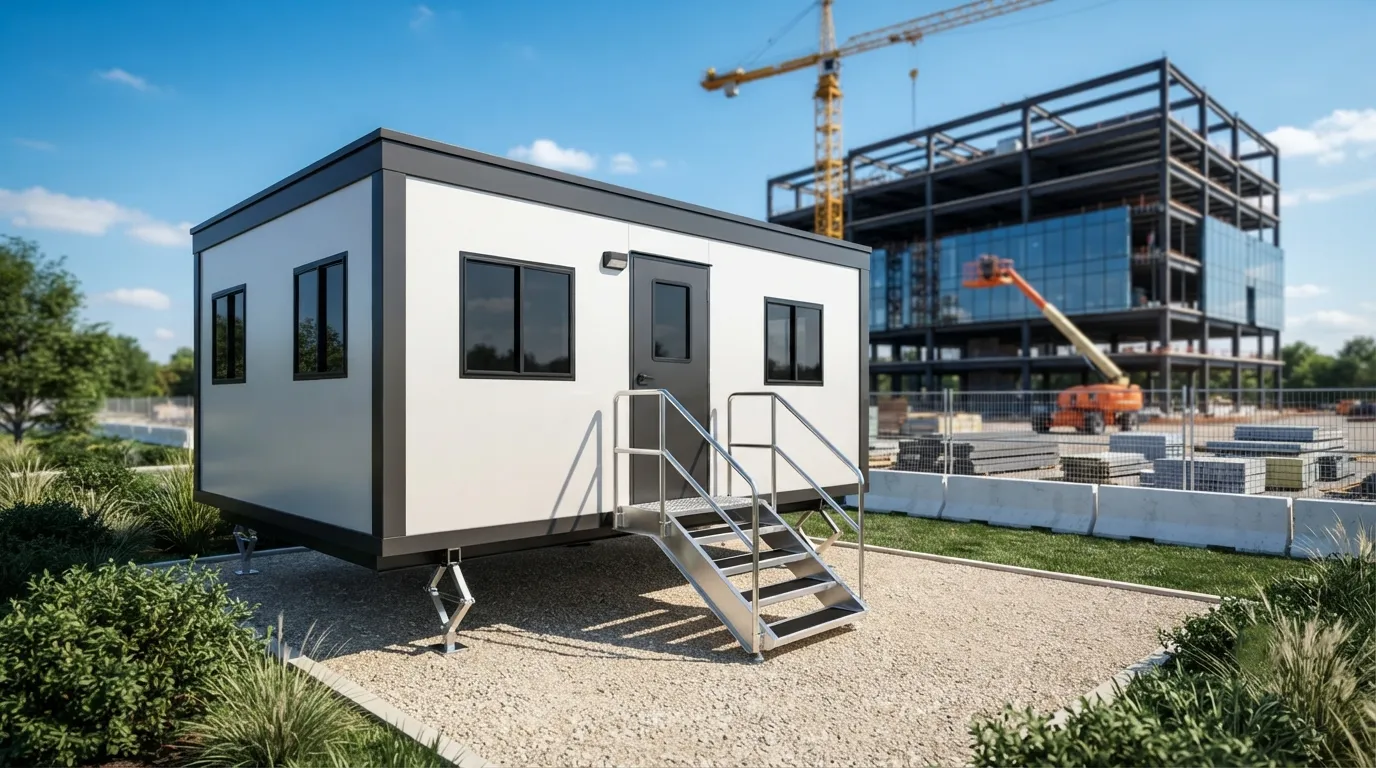
Do you need a permit for a dumpster in Cleveland?
Dumpster placement follows the same private-versus-public logic as portable toilets. On your own lot, a roll-off usually goes down without a permit. Set it on the street, and Cleveland treats that as right-of-way use, which typically needs sign-off, though the exact process is NOT verified here and should be confirmed directly with the city before the truck shows up. This mirrors the question we get about a delaware porta potty rental or a jersey city dumpster permit: the rule is rarely about the equipment, it's about the ground it sits on. Our dumpster permit requirements page goes deeper on this exact split. If you're sizing the box itself, dumpster sizes and dimensions compares options, and construction dumpster rental covers job site accounts. Know also what you can't toss in: see what cannot go in a dumpster and dumpster weight limits before you fill it past the line.
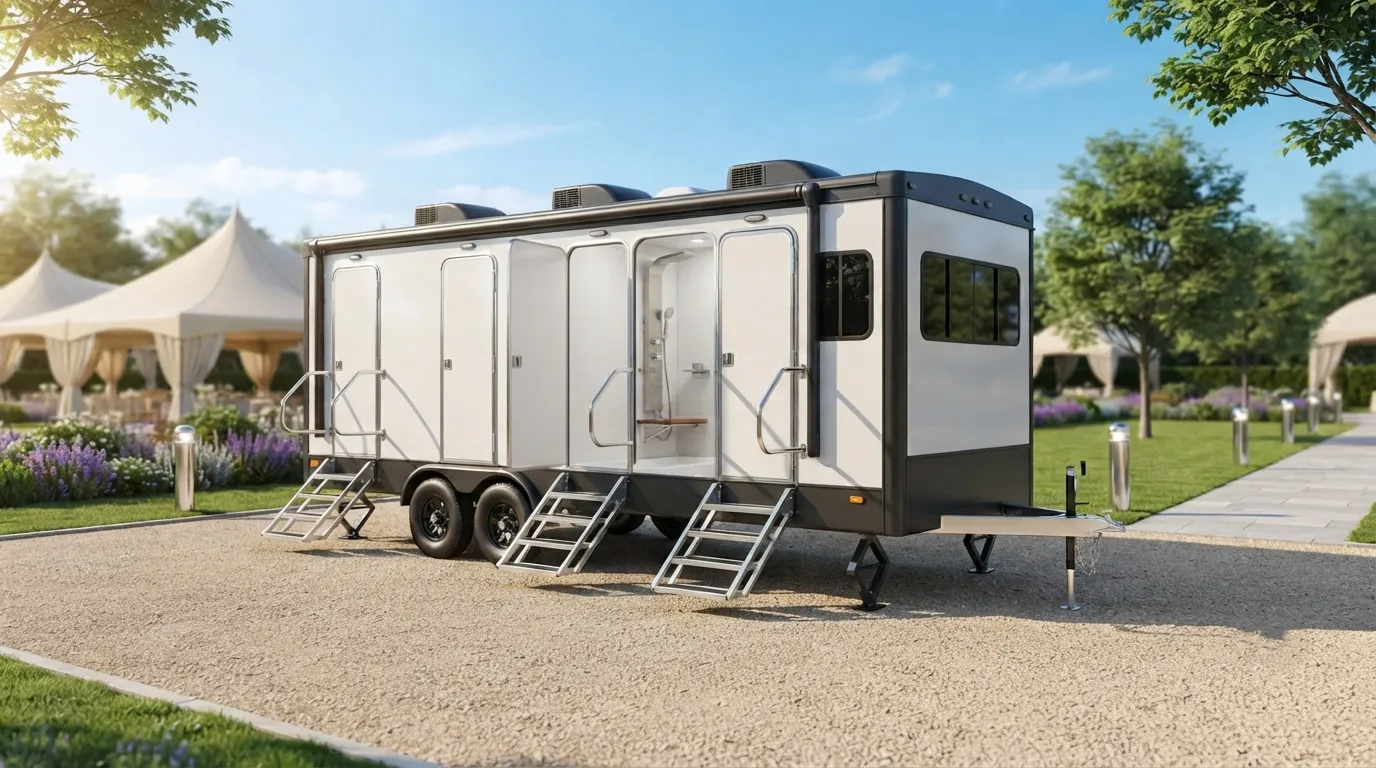
What OSHA and code rules affect placement, not permits?
Permits are a city question. Worker access and unit counts are a federal one, and they get confused constantly. OSHA 1926.51(c)(1) sets toilet ratios for construction sites: one facility for 20 workers or fewer, then one toilet seat and one urinal per 40 workers as crews grow past that, dropping to one per 50 once you hit 200 workers or more. That standard drives our how many porta potties do I need guidance and our full OSHA portable toilet requirements page. Separately, 29 CFR 1910.141(d)(2) requires soap and towels or a hand-drying device at washing stations, and hand sanitizer alone does not satisfy it, which matters if you're adding a handwashing station rental or comparing it against a hand sanitizer station rental. If your crew works with paints, coatings, or insecticides, OSHA 1926.51(f)(1) requires washing facilities specifically for that contaminant exposure. None of this replaces a city permit check, but it does shape where and how many units you place once the ground is settled.
| unit | day | week | month |
|---|---|---|---|
| standard | $100-$350 | $130-$500 | $125-$325 |
| ada | $200-$400 | $200-$240 | n/a |
| deluxe | $85-$1200 | $150-$290 | n/a |
Do I need a permit for a portable toilet on a residential job?
Usually not, if it stays on your property. Home renovation crews placing a unit in a driveway or yard rarely trigger permitting. See home renovation porta potty for setup specifics. Curb or street placement is the trigger point, and that always needs a direct city check.
Does a temporary power pole need a separate permit?
Often yes, since it ties into electrical service and inspection. This is handled apart from sanitation equipment. Check with the city before scheduling; our temporary power pole page covers setup basics, but the permit itself is a municipal question we can't answer generically.
Can I place a porta potty on the sidewalk?
That counts as right-of-way use in most cities, Cleveland included, and it typically needs approval. Confirm with the city before delivery. Our crews can advise on alternate spots nearby that avoid the issue entirely.
What about event rentals at parks or venues?
Public land almost always means a permit, separate from equipment rental. Festival, marathon, and county fair organizers should start that process early. See festival restroom rental and marathon and race restrooms for planning timelines.
Who do I ask if I'm not sure?
Call the city directly before delivery day, every time placement touches public property. Cleveland Porta Pros can tell you what we've seen work, but the permit decision itself sits with the municipality, not with us.
Next step
Get a delivery date
Tell us the address, the dates and the headcount. We size the order and confirm the route.